Brief Analysis of Testing Methods and Principles for Various Specifications of Anti-Static Floor Coatings
After completion of the epoxy anti-static floor coating, the anti-static performance of the floor must be tested to verify whether the epoxy anti-static floor meets the requirements of the national “Code for Construction and Acceptance of Anti-static Floors.” Key performance indicators for epoxy anti-static floor coatings include: A. Surface Resistance (resistance value must fall within 1.0×10^6Ω to 1.0×10^9Ω). The ratio of the direct current voltage applied between standard electrodes on the material surface to the current flowing between the electrodes after a specified energization period, disregarding any possible polarization effects on the electrodes. B. System Resistance (resistance value must fall within 5.0×10^4Ω—1.0×10^9Ω). The total resistance between the test surface of the object and its grounding point. C. System Ground Resistance (resistance ≤ 10Ω). The resistance encountered by current flowing from the grounding system into the earth, then through the earth to another grounding body or dispersing into the distance. It includes the resistance of the grounding conductor and the grounding body itself, the contact resistance between the grounding body and the earth, and the resistance of the earth between two grounding bodies or the resistance of the earth from the grounding body to infinity.
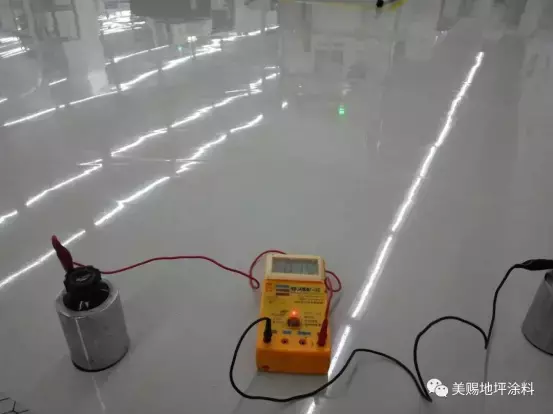
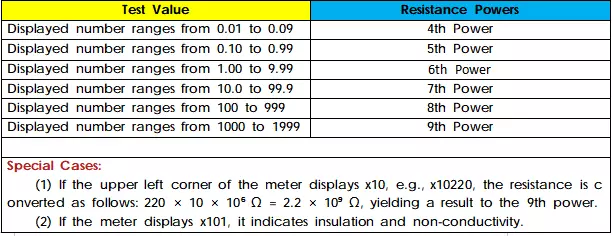
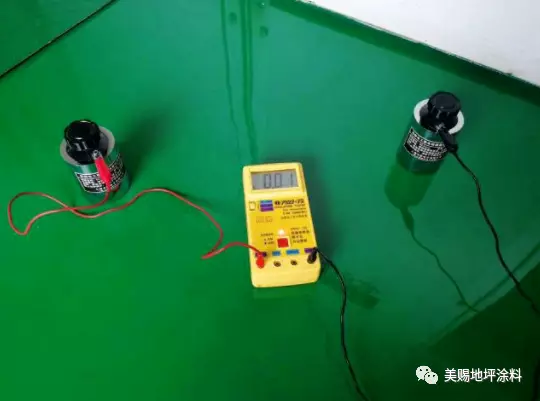
Testing Methods for Anti-Static Effectiveness of Anti-Static Floor Coatings: 1. Surface Resistance Measurement: Typically, place both electrodes of the tester on the floor surface and observe the reading to determine compliance. 2. System Resistance Measurement: Typically, place one electrode of the tester on the floor surface and attach the other end directly to the grounding wire using a clamp, then observe the reading to determine compliance. Precautions for Testing the Anti-Static Effectiveness of Anti-Static Floor Paint: 1. Ensure the stability of the testing environment. Conduct testing at a temperature of 23±8°C and humidity of 50±5%, as excessively high or low temperatures and humidity may affect the accuracy of the test data. 2. Ensure the anti-static floor surface is clean. Before testing, clear the floor area to guarantee the surface is free of dust, moisture, or other contaminants that could affect data generation. 3. Perform surface resistance testing on the anti-static floor at least 5 times. Multiple tests allow comparison of data to identify discrepancies, enhancing accuracy and spatial assessment reliability. 4. Grounding rods must be installed separately from building lightning protection grounding and industrial power grounding. Rods should be positioned at least 1.5 meters from structures, with pits dug to groundwater level. Ground resistance must be less than 1Ω. Resistance Tester Principle: Data displayed on the meter is converted using Ohm's Law: 1 MΩ = 1.0 × 10? Ω. For example, if the meter reads 0.12, the converted test data is: 0.12 MΩ × 10? Ω = 1.2 × 10? Ω. Thus, the test result is the fifth power.